Yes, reactive dog training in West Michigan can help make walks calmer when your dog learns to look to you when something stressful happens. The goal is not to avoid every dog, person, bicycle, or front-door visitor forever. It is to build focus and engagement that hold up in daily life.
Many families tell us their dog listens well in the living room, then barks, lunges, freezes, pulls, or ignores cues as soon as a trigger appears outside. We teach practical skills for those hard moments, so you understand what your dog needs and what to do next.
Make Walks Feel Manageable Again
A calmer walk does not mean your dog must enjoy close greetings, crowded paths, or every new situation. Some dogs need more space than others. Progress means your dog can recover sooner, stay safer, and make better choices with your guidance.
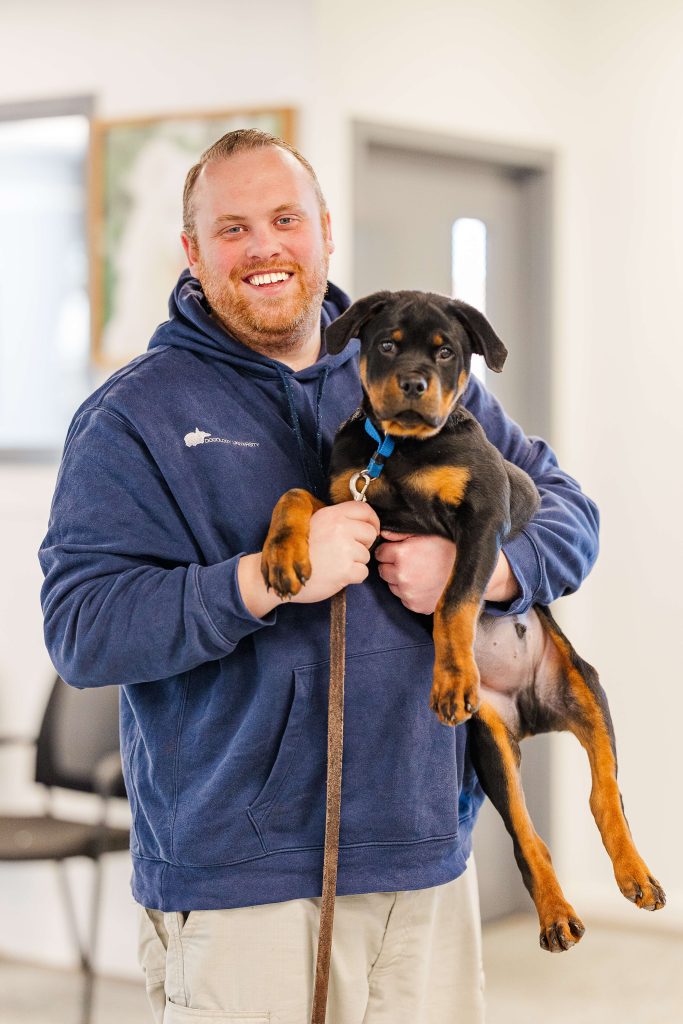
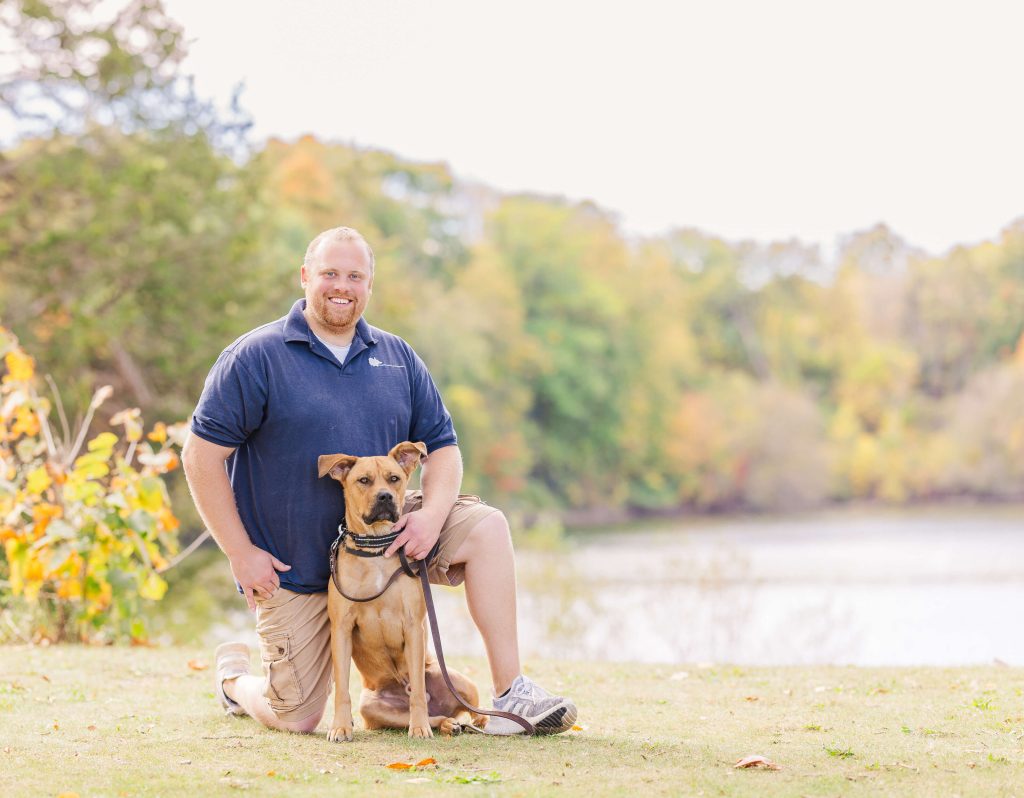
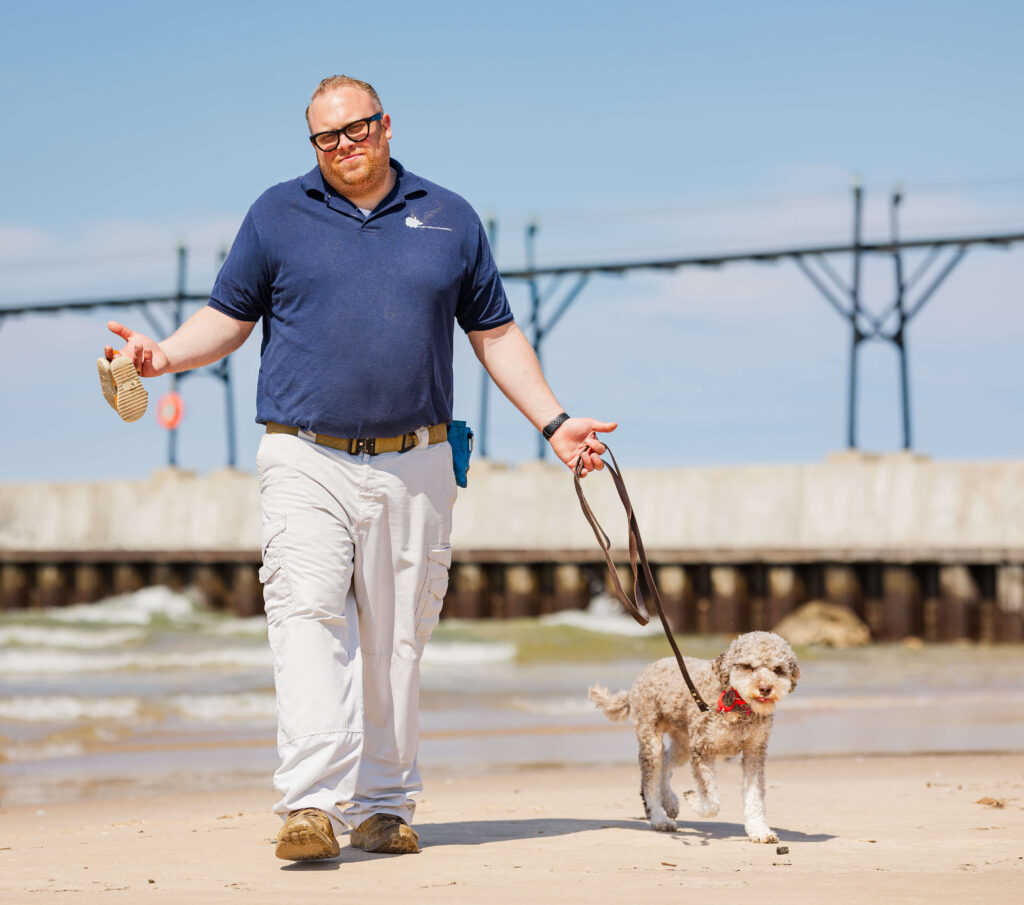
Dogology University is a veteran-owned training company based in Grand Haven. Our founder, Matthew Lamarand, is a U.S. Air Force veteran, former military K9 handler, AKC Canine Good Citizen evaluator, IACP member, and author of Dogology 101: The Secret Language of Dog Whispering.
The training goal is simple: behavior that holds up on walks, at the door and around other dogs. That takes more than practicing a command indoors. It takes a partnership with your dog and a plan you can use when real life gets busy.
Why Dogs React When Walks Feel Too Hard
Reactivity is often a response to stress, frustration, uncertainty, overexcitement, or the feeling that there is no way to create distance. Your dog may bark and pull because the environment is harder than their current skills, not because they are trying to be difficult.
Repeated reactions can become a pattern. If barking causes another dog to move away, ends an interaction, or releases built-up tension, it may work for your dog in that moment. The behavior can then happen again the next time your dog feels overwhelmed.
Reactive dog training in West Michigan should begin by identifying what triggers the reaction, how close the trigger is, and what your dog does before the outburst. Early signs may include:
- Stiffening, staring, or closing their mouth
- Pulling forward or slowing down
- Whining, pacing, or scanning the area
- Ignoring familiar cues or treats
- Turning away, freezing, barking, or lunging
Sudden behavior changes, serious aggression concerns, signs of anxiety, or possible pain should be discussed with your veterinarian. From there, Behavior Training can help you build clearer routines and safer handling skills.
Build Focus Before You Face the Trigger
Our Focus-Based Training method follows a simple process: Train It, Test It, Transfer It. First, your dog learns a skill where they can think clearly. Then we add manageable distractions. Finally, we practice that skill in the places where it matters.
Your dog learns to look to you when something stressful happens. That glance creates a pause between the trigger and the reaction. It gives your dog a familiar job, and it gives you time to guide the next choice.
We built our method on principles from military K9 work, adapted for family dogs. The focus is not just formal commands; it is also on avoiding dependence on equipment. A dog may respond while a certain tool is on, then struggle when it is removed. The concern is dependency on equipment, not the equipment itself. Your dog learns to focus on you, not on a tool.
Early practice may look like this:
- Your dog notices another dog from a comfortable distance
- You guide attention back to yourself before tension rises
- You move away while your dog can still succeed
- The same focus skill is practiced at home, at the door, and on calm walks
Practice Skills in Real West Michigan Settings
A skill is only useful when it transfers beyond the first training setting. The Grand Haven boardwalk can bring walkers, bicycles, strollers, other dogs, and changing activity levels. Hofma Preserve offers trail distractions that can be approached at a pace that fits your dog’s current skill level.
With his family’s permission, Matthew worked with Cooper, a Grand Haven dog who barked and lunged when other dogs appeared near trail junctions at Hofma Preserve. Cooper first practiced checking in with his family at home and on quiet neighborhood walks. Training then moved to the Hofma Preserve parking area, where he could notice dogs from a distance without reaching his limit, before progressing to short trail sessions. His family learned to spot his staring and stiffening early, create space, and guide his attention back before the barking started.
Mobile Day School can be a practical fit for busy families because a trainer practices with your dog during the day, then teaches you how to maintain the work. In-Home Private Lessons may be helpful when the biggest challenges happen at your front door, on your neighborhood route, or within your daily routine.
Choose Support You Can Maintain at Home
Different dogs and households need different levels of support. In-Home Private Lessons can give you direct coaching in the situations you face most often. Mobile Day School can pair professional practice with owner instruction. Board & Train may suit some dogs and families when follow-through lessons help transfer skills back home.
Training can fade when a dog has learned a skill in one setting but has not practiced it elsewhere. We teach you why it works, so you can handle what comes next. That includes knowing when to make a walk easier, how to spot early tension, and how to build on progress without rushing your dog.
The right reactive dog training in West Michigan should teach the family why the behavior happens, why the training works, and how to maintain it after formal sessions end. For some dogs, Obedience Training, Off-Leash Training, or AKC Canine Good Citizen preparation may become appropriate later goals once reliable everyday skills are in place.
Build Calmer Walks with a Clear Plan
Calmer walks come from teaching focus before your dog reaches their limit, practicing in real-life settings, and following a plan that makes sense after training ends. This approach builds stronger communication between dogs and families.
Progress is not about forcing every dog into busy spaces or close greetings. It is about recognizing what your dog can handle today, creating room for better choices, and steadily building confidence through practice.
Build Skills That Hold Up Beyond the Walk
Dogology University helps owners understand what drives reactive behavior and practice responses that work in everyday situations. Get help with reactive dog training in West Michigan through In-Home Private Lessons that teach both you and your dog. We use Focus-Based Training to build behavior that holds up on walks, at the door, and around other dogs. Call (616) 935-6815 for a free phone assessment.