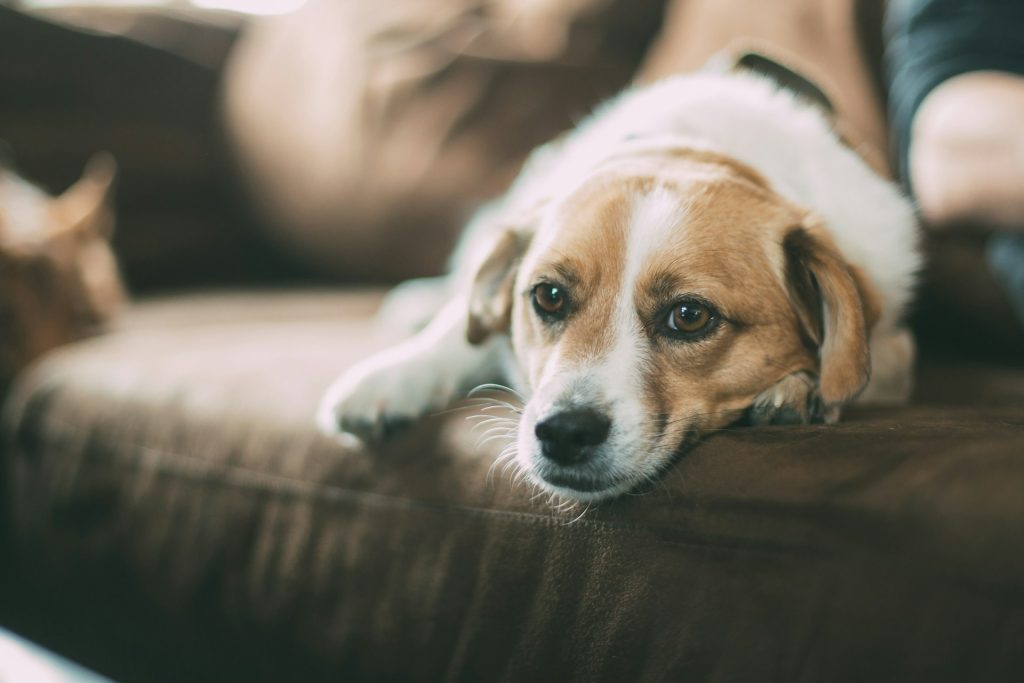
The thunderstorm rolls in, and suddenly a 70-pound dog is wedged behind the toilet, trembling. Or the doorbell rings, and what should be a simple greeting turns into ten minutes of frantic barking. Maybe it’s the car ride that transforms a happy dog into a panting, drooling mess before you’ve left the driveway.
Anxiety affects dogs differently, but the impact on family life is consistent: stress, limitation, and the heartbreak of watching a beloved pet struggle with fears they can’t escape.
The good news? Dog anxiety training works. Not the kind that promises overnight miracles, but systematic approaches that help dogs build genuine confidence from the inside out.
What Causes Anxiety in Dogs?
Understanding anxiety’s origins helps owners recognize what their dogs need and why certain approaches work better than others.
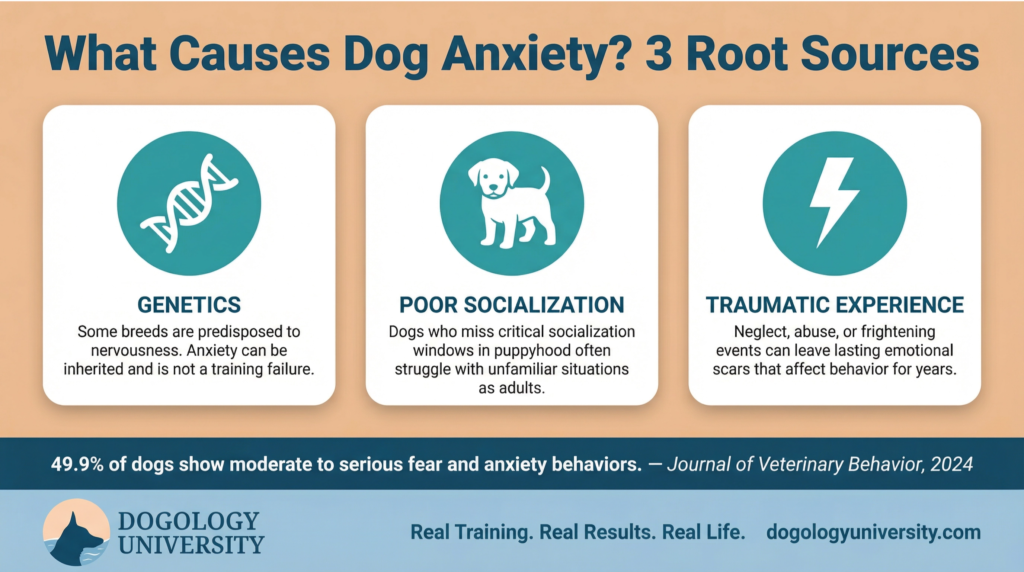
Anxiety in dogs typically stems from three sources: genetics, inadequate early socialization, or traumatic experiences. Some breeds carry predispositions toward nervousness. Dogs who missed critical socialization windows during puppyhood often struggle with unfamiliar situations as adults. And dogs who experienced neglect, abuse, or frightening events may carry those emotional scars for years.
A 2024 study in the Journal of Veterinary Behavior found that 49.9% of dogs display moderate to serious fear and anxiety behaviors. Separation and attachment issues affected an even larger percentage at 85.9%. These numbers reveal that anxiety is among the most common behavioral challenges dog owners face.
The manifestations vary widely. Anxious dogs may show their stress through:
- Excessive Vocalization: Whining, barking, or howling when stressed.
- Destructive Behavior: Chewing furniture, scratching at doors, or destroying household items.
- Physical Symptoms: Involuntary trembling, panting, pacing, or excessive drooling.
- Shutdown: Refusing food, treats, or interaction, and appearing frozen or unresponsive.
What all anxious dogs share is an inability to cope with certain triggers. Their nervous systems perceive threats where none exist, flooding their bodies with stress hormones that make learning and relaxation nearly impossible without intervention.
Why Does Dog Anxiety Training Require Real-World Environments?
Here’s where many training approaches fall short. Teaching a dog to remain calm in a controlled facility is one thing. Having that calm transfer to actual life situations is another matter entirely.
Dogs don’t generalize well. A dog who learns to relax around other dogs in a training center may still panic when encountering dogs on neighborhood walks. The skills feel context-specific rather than transferable.
Research published in Scientific Reports found that fearfulness is one of the strongest predictors of aggressive behavior in dogs. This connection highlights why addressing anxiety in real environments matters. Dogs need to learn that the actual places and situations triggering their fear are safe.
Real-world training exposes dogs to genuine triggers at manageable levels. A dog afraid of traffic sounds practices near actual streets, not recordings. A dog reactive to other dogs works around real dogs at appropriate distances. The learning happens where it needs to apply.
This approach follows the principles of systematic desensitization and counterconditioning, which behavioral science has validated as effective for fear-based problems. Gradual exposure, combined with positive associations, rewires the dog’s emotional response to previously frightening stimuli.
| Feature | Facility-Based Training | Real-World Training (Dogology University) |
|---|---|---|
| Environment | Sterile, controlled, predictable | Dynamic, unpredictable, authentic |
| Triggers | Simulated or absent | Genuine (traffic, strangers, other dogs) |
| Generalization | Poor; skills often don’t transfer | Excellent; skills are learned in context |
| Owner Involvement | Limited to class time | High; owners learn to manage in real life |
| Effectiveness | Low for real-world anxiety | High for building lasting confidence |
| Best For | Basic obedience foundations | Complex anxiety and reactivity |
How Does Mobile Day School Help Anxious Dogs?
Mobile Day School brings professional anxiety training directly into the environments where dogs struggle most.
Instead of training in an isolated facility, dogs work in parks, neighborhoods, downtown areas, and public spaces throughout Grand Haven, Holland, Spring Lake, and surrounding West Michigan communities. They encounter the sights, sounds, and situations that trigger their anxiety while receiving expert guidance through each exposure.
What Makes This Approach Different?
The trainer controls the difficulty level in real time. If a dog shows signs of stress, the trainer can increase distance from triggers, reduce intensity, or shift to an easier challenge. This prevents the flooding that often worsens anxiety when dogs face too much too fast.
Daily variety prevents habituation to single environments. Dogs who only train in one location may remain anxious everywhere else. Mobile training ensures skills develop across multiple contexts, creating genuine confidence rather than location-dependent calm.
The presence of a professional allows for immediate feedback and adjustment. Anxious dogs need precise timing and appropriate responses to their behavior. Missteps can reinforce fear rather than reduce it. Having expert guidance throughout the process prevents setbacks that derail progress.
What Specific Anxieties Respond to This Training?
Mobile training addresses a range of anxiety-related challenges:
Environmental fears like traffic, crowds, or unfamiliar locations become manageable through gradual, positive exposure in actual settings. Dogs learn that new places don’t pose threats.
Social anxiety around unfamiliar people or dogs improves when dogs practice appropriate responses during real encounters. They discover that strangers can predict good things rather than danger.
Noise sensitivity benefits from controlled exposure to actual environmental sounds. Dogs who panic at sirens or construction can develop tolerance when these sounds occur at appropriate distances during positive training experiences.
Generalized anxiety often improves as dogs build overall confidence through successful navigation of varied situations. Each positive experience adds to a foundation of resilience.
How Does In-Home Training Address Household Anxiety?
Some anxiety manifests specifically within the home environment. Separation distress, doorbell reactivity, resource guarding, and territorial behavior require intervention in the actual spaces where they occur.
Private Dog Training brings professional guidance directly into the home, allowing trainers to observe and address anxiety in its natural context.
Why Does Location Matter for These Issues?
Separation anxiety happens at home. A dog who remains calm at a training facility may still panic when left alone in their own house. Effective treatment must occur in the environment where the problem exists.
Trainers working in the home can assess the full picture. They observe how the family’s routine affects the dog’s stress levels. They identify environmental factors contributing to anxiety. They coach every family member through proper responses, ensuring consistency that facility-based training can’t provide.
The home setting also allows for immediate implementation of management strategies. Trainers can recommend specific changes to the physical environment, adjust daily schedules, and establish new routines that support the dog’s progress.
What Does In-Home Training Include for Anxious Dogs?
Dogology University approaches anxiety training through comprehensive assessment followed by customized intervention.
Trainers first identify specific triggers and the dog’s threshold for each. This information guides the development of a systematic desensitization plan tailored to that individual dog’s needs.
Counterconditioning protocols pair anxiety triggers with positive experiences, gradually shifting the dog’s emotional associations. What once predicted fear begins predicting rewards instead.
Family education ensures everyone understands how to support the dog’s progress. Inconsistent responses from different household members can undermine even excellent training. When everyone follows the same approach, change happens faster and lasts longer.
What Results Can Families Expect from Professional Dog Anxiety Training?
Progress with anxious dogs requires patience. Unlike simple obedience training, anxiety modification involves changing emotional responses, not just behaviors. This deeper work takes time.
Most families notice initial improvement within the first few weeks as dogs begin associating previously scary situations with positive outcomes. Some triggers may resolve relatively quickly while others require extended work.
The goal isn’t to eliminate all nervousness. It’s to bring anxiety to manageable levels where dogs can cope with everyday life without distress. A dog who once panicked at thunder might still notice storms but no longer need to hide for hours.
Lasting change depends on continued practice after formal training ends. Families learn techniques they can apply ongoing, reinforcing the dog’s new emotional associations and preventing regression.
When Should Families Seek Help for an Anxious Dog?
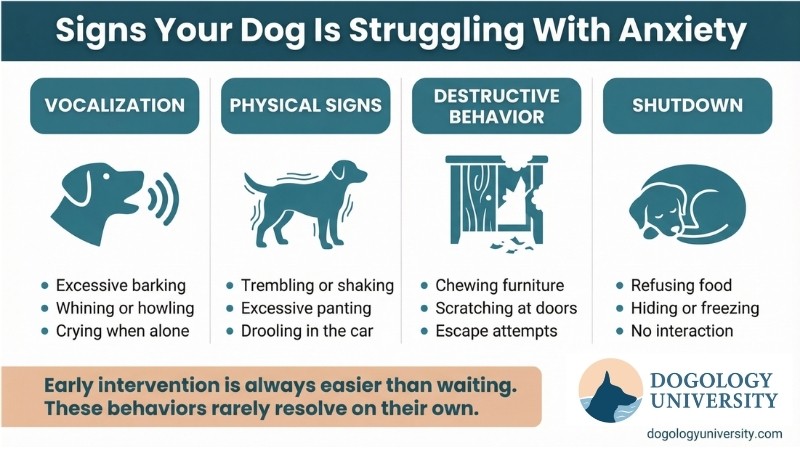
Early intervention produces better outcomes. The longer anxiety patterns persist, the more deeply ingrained they become. Dogs who receive help when problems first emerge typically progress faster than those whose anxiety has solidified over years.
Certain signs indicate professional guidance is needed:
Anxiety that interferes with normal activities like walks, car rides, or basic household routines deserves attention. Dogs shouldn’t live in constant fear of everyday situations.
Destructive behavior when left alone, whether chewing, scratching, or escape attempts, suggests separation distress that rarely resolves without intervention.
Aggressive responses to anxiety triggers, including growling, snapping, or lunging, require professional assessment. Fear-based aggression can escalate without proper handling.
Physical symptoms like excessive panting, drooling, trembling, or loss of appetite indicate stress levels affecting the dog’s wellbeing and health.
Anxious dogs aren’t broken. They’re struggling with emotional responses that feel overwhelming to them. With proper dog anxiety training, they can develop the confidence and coping skills to navigate life with far less stress.
The key lies in working where anxiety actually occurs. Real-world training in actual environments, combined with in-home support for household-specific issues, creates change that transfers into daily life rather than staying confined to a training facility.
Every anxious dog has a calmer version of themselves waiting to emerge. The right training approach helps them find it.
Ready to help your anxious dog find confidence? Contact Dogology University for a consultation. We serve families throughout Grand Haven, Spring Lake, Holland, Allendale, and West Michigan with Mobile Day School and Private In-Home Training designed to address anxiety where it happens.
Real training. Real results. Real life.