Walks used to be enjoyable. Now they feel like navigating a minefield. Every approaching dog triggers panic. Every stranger walking by becomes a potential incident.
The growling started small. Maybe over food. Maybe when guests arrived. Now it’s escalating, and you’re not sure what comes next.
Living with a reactive or aggressive dog changes everything. It’s exhausting. It’s isolating. Outings get canceled. Visitors stop coming. You find yourself making excuses instead of making plans.
Here’s what we know from years of working with families across Grand Haven and West Michigan: behavior modification works. Not quick fixes. Not gimmicks. Real, structured training that addresses why your dog behaves this way and teaches them a better path forward.
What Is Behavior Modification and Why Does It Matter?
Behavior modification goes deeper than teaching commands. It changes how your dog feels about the things that trigger their reactions. When the emotional response changes, the behavior follows.
Why Don’t Basic Commands Fix Aggression?
A reactive dog might know “sit” perfectly. They might perform beautifully in your living room. But the moment another dog appears on a walk, none of that matters. Fear or frustration takes over, and training disappears.
That’s because aggression and reactivity aren’t obedience problems. They’re emotional responses. Your dog isn’t choosing to ignore you. Their brain has shifted into a state where listening becomes nearly impossible.
Effective behavior modification addresses the root cause. We don’t just teach your dog what to do. We help them feel differently about the situations that currently overwhelm them.
What Does Real Behavior Modification Look Like?
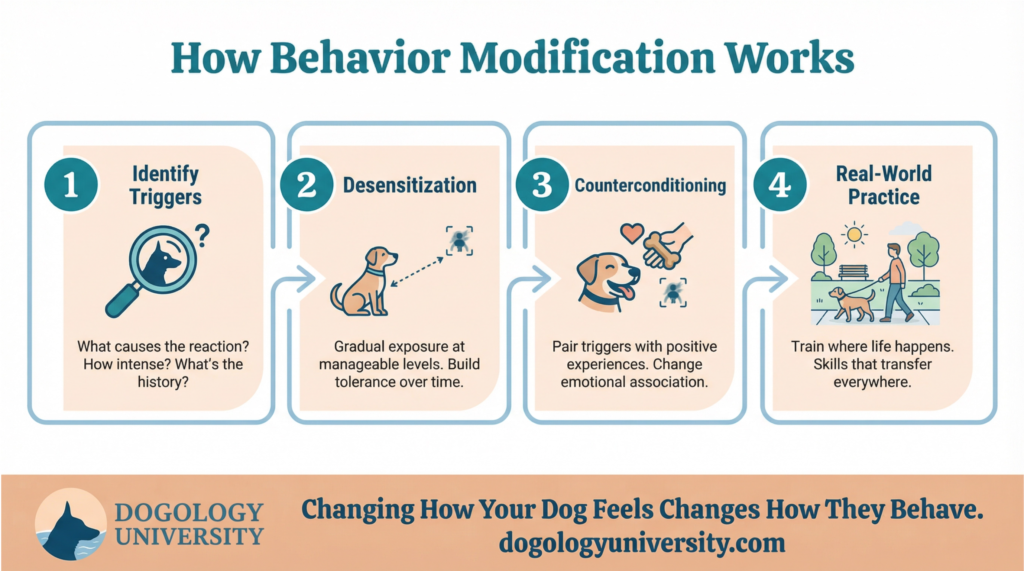
It starts with understanding your specific dog. What triggers their reactions? How intense is their response? What’s the history behind it?
From there, we use techniques grounded in behavioral science and real-world application. Desensitization gradually exposes your dog to triggers at levels they can handle, building tolerance over time. Counterconditioning pairs those triggers with positive experiences, changing the emotional association.
The Merck Veterinary Manual describes counterconditioning as a process that helps fearful or aggressive animals develop positive associations with previously threatening stimuli. That’s exactly what we aim for. A dog who sees another dog and thinks “good things happen” instead of “danger.”
This approach takes time. It requires consistency. But it creates change that lasts because we’re not suppressing behavior. We’re transforming the underlying emotion.
Why Do Dogs Become Aggressive or Reactive?
Dogs don’t act this way to be difficult. There’s always a reason behind the behavior. Understanding that reason shapes how we address it.
What Causes Fear-Based Reactivity?
Most reactive dogs are scared. They’ve learned that barking, lunging, or snapping makes scary things go away. The other dog leaves. The stranger backs off. The strategy works, so they keep using it.
This often traces back to lack of early socialization. Dogs who weren’t exposed to diverse people, animals, and environments during their critical developmental period may find normal situations threatening.
Traumatic experiences also play a role. A dog who was attacked or frightened during a formative moment may carry that fear forward. Their brain learned to expect danger.
What About Frustration and Territorial Behavior?
Not all reactivity comes from fear. Some dogs genuinely want to greet other dogs but become frustrated when the leash prevents them. That frustration builds until it explodes into what looks like aggression.
Territorial dogs may seem fine until someone approaches their home or their food. They’re protecting what feels like theirs. Resource guarding falls into this category too. A dog who growls over their food bowl isn’t being mean. They’re anxious about losing something valuable.
How Does Environment Influence Behavior?
Dogs are products of their circumstances. A dog who lacks mental stimulation, physical exercise, or clear structure often develops behavioral problems. That pent-up energy needs somewhere to go.
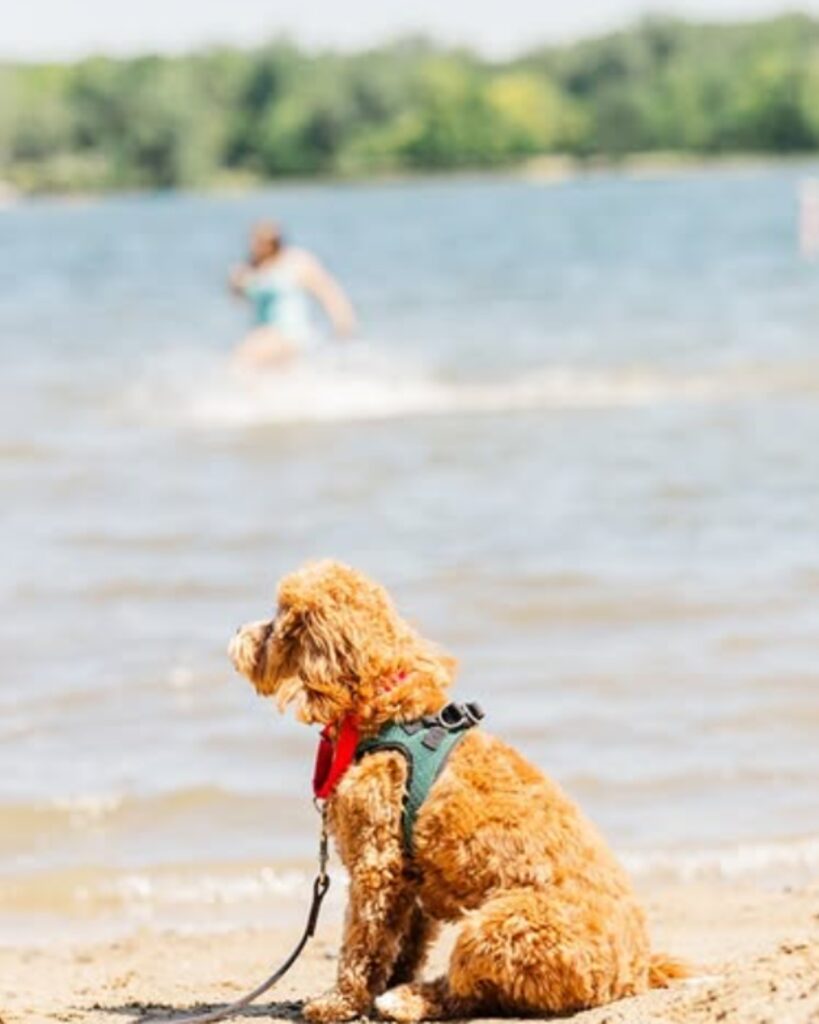
Here in West Michigan, dogs encounter constant stimulation. Busy beaches in Grand Haven.
Downtown areas. Popular parks where dogs cross paths. Without proper preparation, these environments overwhelm dogs who haven’t learned to navigate them calmly.
That’s why we emphasize real-world training. Skills practiced only at home don’t transfer automatically to places where you actually need them.
When Should You Seek Professional Help?
Some behavior challenges respond to consistent owner effort. Others require professional intervention for safety and effectiveness. Knowing the difference matters.
What Signs Indicate Serious Concerns?
Seek help immediately if your dog has bitten hard enough to break skin. Bite history suggests escalation that owners shouldn’t address alone. Safety comes first.
Watch for warning signs that precede serious aggression. Prolonged staring. Stiff body posture. Raised hackles. Showing teeth with a closed mouth. These signals indicate your dog feels genuinely threatened and may bite if pushed further.
Sudden behavior changes warrant veterinary evaluation first. Pain, illness, and neurological issues can cause aggression that appears behavioral but has medical roots. Rule out physical causes before assuming it’s purely a training issue.
What Should You Look for in a Trainer?
Experience with aggression and reactivity matters. These cases require different skills than basic obedience training. Ask specifically about their background with challenging dogs.
Methods matter too. Punishment-based approaches often make aggression worse because they increase fear and anxiety. Look for trainers who emphasize positive reinforcement, clear communication, and building trust.
Be cautious of anyone promising quick fixes. Serious behavior issues take time to resolve. A trainer who understands this will be honest about timelines and realistic about outcomes.
How Does Early Socialization Prevent Problems?
Prevention beats treatment every time. Puppies who receive proper socialization rarely develop the fear-based issues we see in adult dogs.
What Happens During the Critical Socialization Period?
Between roughly three and fourteen weeks of age, puppies form lasting impressions about what’s safe and normal. Experiences during this window shape how they respond to the world for life.
Puppies exposed to diverse people, dogs, environments, and sounds during this period typically grow into confident adults. They’ve learned that novelty isn’t threatening. New experiences feel exciting rather than scary.
Missing this window doesn’t guarantee problems, but it makes later socialization significantly harder.
How Does This Connect to Adult Behavior Issues?
Well-socialized dogs have larger comfort zones. Most situations feel familiar because they’ve encountered enough variety early on. Without perceived threats, there’s no need for defensive behavior.
Socialization also teaches dogs how to communicate appropriately. They learn to read body language and respond proportionally. Under-socialized dogs often misinterpret signals and overreact because they never learned the social rules.
If you’re raising a puppy now, prioritize positive exposure to everything they’ll encounter as an adult. It’s the single most important investment you can make in their future behavior.
What Training Options Work for Behavior Modification?
Different situations call for different approaches. We offer several programs designed to meet families where they are.
Why Does Mobile Day Training Make a Difference?
Mobile Day Training takes dogs into the environments where problems actually occur. We train at parks, on neighborhood walks, in public spaces throughout Grand Haven, Spring Lake, Holland, and surrounding communities.
This matters because dogs are contextual learners. A dog who behaves perfectly in a training facility may fall apart the moment they encounter real-world distractions. By training where life happens, skills transfer immediately to the situations you’re actually navigating.
Your dog comes home tired, focused, and practiced in the specific environments where you need reliability.
When Is Private Training the Right Fit?
Private Dog Training brings personalized attention directly to your home. Sessions happen where your dog actually lives, addressing behaviors in the exact context where they occur.
This approach works well when scheduling flexibility matters or when dogs need more individualized attention. We observe problems firsthand and coach you through management strategies specific to your household.
What Creates Lasting Behavioral Change?
Transformation doesn’t happen overnight. It requires consistent effort, realistic expectations, and commitment to the process.
How Long Does Behavior Modification Actually Take?
Timelines vary based on severity, history, and consistency. Minor issues might show improvement in weeks. Serious aggression cases often require months of dedicated work.
You’ll likely see initial progress relatively quickly as management strategies reduce trigger exposure. Deeper change takes longer because we’re rewiring emotional responses, not just teaching commands.
Setbacks happen. A dog who seemed improved might react strongly to an unexpected trigger. This doesn’t erase progress. It identifies areas needing additional work and reminds us that behavior change isn’t linear.
What Role Do Owners Play in Success?
Everything we teach transfers to you. Training works when owners understand it and apply it consistently. That’s why every program includes education. You’ll learn not just what to do, but why it works.
Daily consistency matters more than occasional intensity. Following protocols every day produces better results than sporadic effort. Structure becomes routine. Routine becomes habit. Habit becomes lasting change.
Management also plays a crucial role. While new patterns develop, we prevent rehearsal of problem behaviors through environmental control. If certain situations trigger reactions, we modify those situations until your dog is ready to handle them successfully.
Behavior modification offers real hope for dogs and families struggling with aggression and reactivity. It’s not about suppressing your dog’s personality or forcing compliance through fear. It’s about helping them feel safer in a world that currently overwhelms them.
Every dog deserves the chance to live without constant anxiety. Every family deserves a companion they can trust. With the right approach, structure, and support, transformation is absolutely possible.
Ready to start? Contact Dogology University for a consultation. We serve families throughout Grand Haven, Spring Lake, Holland, Allendale, and surrounding West Michigan communities.
Real training. Real results. Real life.
FAQs
Reactivity is an overreaction to triggers (barking, lunging). Aggression is intent to harm. Reactivity often stems from fear; aggression can stem from fear, frustration, or territorial behavior. Both require professional intervention.
Yes. Most aggression stems from fear or learned behavior, both addressable through behavior modification. Success depends on severity, consistency, and owner commitment. Serious cases take months, not weeks.
No. Punishment increases fear and anxiety, often making aggression worse. Positive reinforcement and clear communication are more effective and safer.
Minor issues: weeks to months. Serious aggression: 3-6 months or longer. Timeline depends on severity, history, and consistency. Expect initial improvement quickly, but deeper change takes time.
Yes. Puppies socialized between 3-14 weeks develop larger comfort zones and learn appropriate social communication. Well-socialized puppies rarely develop fear-based aggression.